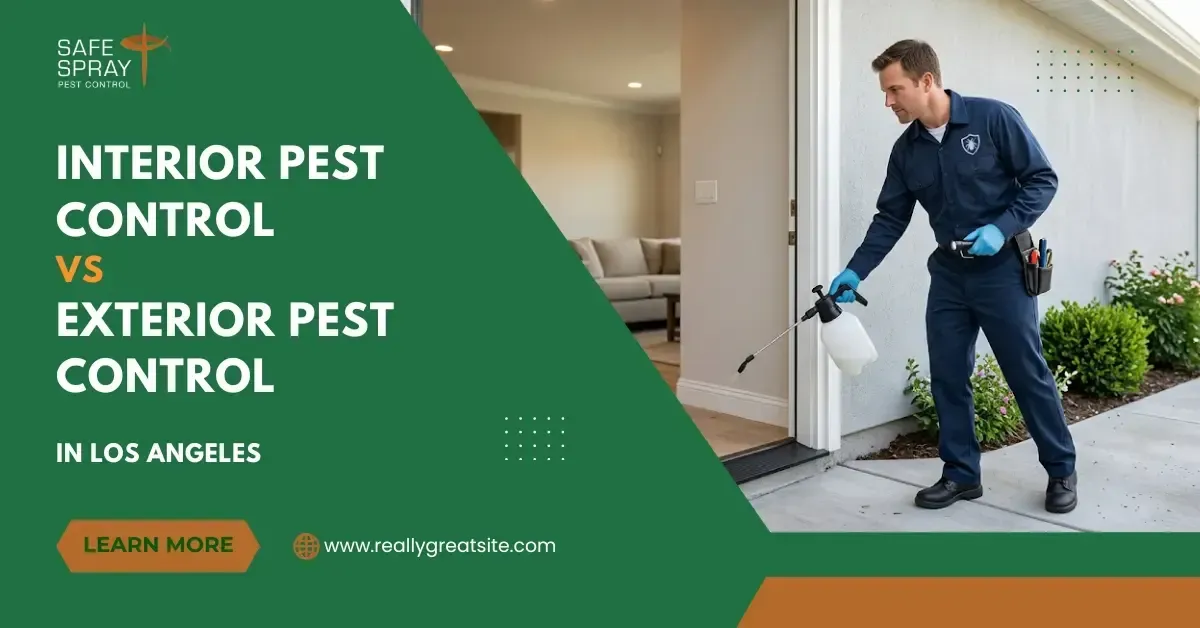
Interior Pest Control vs Exterior Pest Control: Which One Do You Actually Need?
If pests are already inside, you need interior treatment. If they're outside trying to get in, you need exterior treatment. You see a cockroach near your kitchen at night. Or ants show up along your baseboard every morning.
The answer is simple. It depends on where the pest is right now. This guide explains interior vs exterior pest control in plain terms so you know exactly what to book. If you live in Los Angeles or San Bernardino County, pest pressure runs high all year, so knowing the difference helps.
Key Takeaways
Interior pest control treats pests already living inside your home, like cockroaches, bed bugs, ants, and rodents hiding in walls, kitchens, and basements.
Exterior pest control stops pests before they enter by spraying the perimeter and blocking entry points against mosquitoes, termites, and fire ants.
Interior treatment reacts to an active problem. Exterior treatment prevents one from starting.
Most Los Angeles and San Bernardino homes need both because warm weather keeps pest activity high through most of the year.
Getting both services together gives your home the strongest protection and reduces the need for emergency treatments later.
What Is Interior Pest Control?
Interior pest control treats pests that are already active inside your home. A technician inspects every room. They check your kitchen, basement, attic, crawl space, and cracks and crevices in walls.
Then they treat the spots where pests are active using targeted pest control products. This indoor pest control works on bed bugs, cockroaches, rodents, ants, and spiders living inside your home.
What Pests Does It Target?
Interior vs exterior pest control comes down to location. Interior treatment targets pests already living inside.
Cockroaches in walls, cabinets, and under appliances
Bed bugs in mattresses, furniture, and baseboards
Ants trailing along floors and walls
Rodents in the basement, attic, or crawl space
Spiders in corners and hidden spots
When Should You Book Interior Treatment?
Book interior pest control when you see live bugs inside or find signs of an active infestation. These are the signs to watch for:
Droppings near food, cabinets, or baseboards
Scratching sounds inside the walls at night
Live insects and rodents moving through rooms
Bed bug stains or bite marks on the skin
Chewed food packaging or wood damage
A pest control professional can inspect and start treatment quickly.
What Is Exterior Pest Control?
Exterior pest control creates a barrier around your home to stop pests before they come inside. A technician focuses on treating the perimeter of your property. They spray around your home, remove nests, and block entry points.
This preventative service stops pests from entering your home. It works on mosquitoes, termites, fire ants, spiders, and other outdoor pests.
What Pests Does It Target?
Exterior pest control targets pests that live outside and try to get in.
Mosquitoes are breeding in your lawn or yard
Fire ants near your foundation
Termites coming in from the soil
Ticks in grass and garden areas
Earwigs and spiders near doors and windows
When Should You Book Exterior Treatment?
Book exterior pest control when you see pests building up outside or before peak pest season starts. Book it when you notice any of these:
Ant trails are forming near your foundation
Mosquitoes breed in standing water in your lawn
Termite mud tubes forming near soil or wood
Spider webs and nests are building up around entry points
Ticks or earwigs showing up near your garden or yard
In Los Angeles and San Bernardino, hot, dry weather pushes ants, rodents, and cockroaches toward homes looking for water and food. Getting perimeter treatment before that happens is a smart preventative step.
The Real Difference Between the Two
Interior treatment fixes an active pest problem. Exterior treatment stops one from starting.
Here's a simple comparison.
Both services use different pest control strategies and work best together for full protection.
Signs You Need Interior Pest Control
You need interior pest control when pests are already living or moving inside your home.
You see live cockroaches, ants, or spiders inside
You find droppings near your kitchen, basement, or attic
You spot bedbugs or wake up with bite marks
You hear scratching inside the walls at night
You find pest damage on food packaging or wood
If you see any of these signs, book a thorough inspection soon. A pest control professional can tell you exactly what you're dealing with and where it's coming from. Not sure if you should handle it yourself or call someone? Read this guide on diy vs professional interior pest control before you decide.
Signs You Need Exterior Pest Control
You need exterior pest control when pests are active outside and moving toward your home.
See mosquitoes, fire ants, or ticks in your lawn
Spot termite mud tubes near your foundation
Find spider webs and nests near entry points
Notice bugs gathering near outdoor lights at night
Pest activity near your garbage bin or garden
The University of California IPM Program notes that Southern California's warm weather keeps outdoor pest activity high through most of the year. Treating the perimeter regularly is one of the best ways to keep pests away from your home.
Can You Get Both at the Same Time?
Yes, you can get both, and many homeowners in this area get both for full protection. Safe T Spray Pest Control offers combined indoor and outdoor pest control plans. They inspect your full property first. Then they build a pest management plan based on what they find inside and outside. Here is what a combined plan typically covers.
Safe T Spray Pest Control uses eco-friendly pest control products that are safe around your child, your pet, and your food.
Not sure if you need a one-time visit or an ongoing plan? This guide on emergency vs scheduled pest control helps you figure out what fits your situation.
Which Service Do Homes in Los Angeles and San Bernardino Actually Need?
Most homes here need both because the warm climate keeps pests active through most of the year. Los Angeles and San Bernardino stay warm through most of the year. Dry summers push ants, rodents, and cockroaches inside looking for water and food.
Winter rains bring termites closer to foundations and increase cockroach activity near homes. Mosquitoes and ticks stay active in yards well into fall. Here is what local homeowners deal with most by season:
Safe T Spray Pest Control has served this area for over 13 years. They know which pests are active in each season and build pest control strategies around your specific home. They use eco-friendly pesticide options that are safe for families. You can check pesticide application safety guidelines at the EPA pest control safety page. Knowing what goes around your home matters when children, pets, and food are nearby.
FAQs
Is exterior pest control enough on its own?
No. Exterior pest control blocks pests from coming in, but a technician still needs to treat pests already active inside your home.
How often should I get interior pest control?
For active infestations, treat right away. After that, the quarterly pest control service keeps your home protected.
What pests need both interior and exterior treatment?
Ants, cockroaches, termites, and rodents often need both. They nest outside and come inside your home to feed.
Is interior pest control safe for kids and pets?
Yes, when a trained pest control professional handles it. Safe T Spray Pest Control uses products safe for your whole family.
How do I know if pests are coming from outside or already inside?
A thorough inspection by a pest control technician will find entry points, nests, and show you exactly where the pest problem is coming from.
Got a Pest Problem? Let's Fix It.
You now know the difference between interior vs exterior pest control. If you're not sure which one you need, Safe T Spray Pest Control offers free inspections and builds a plan based on what your home actually needs. Call today and get your home or business protected. They serve Los Angeles County and San Bernardino County.
