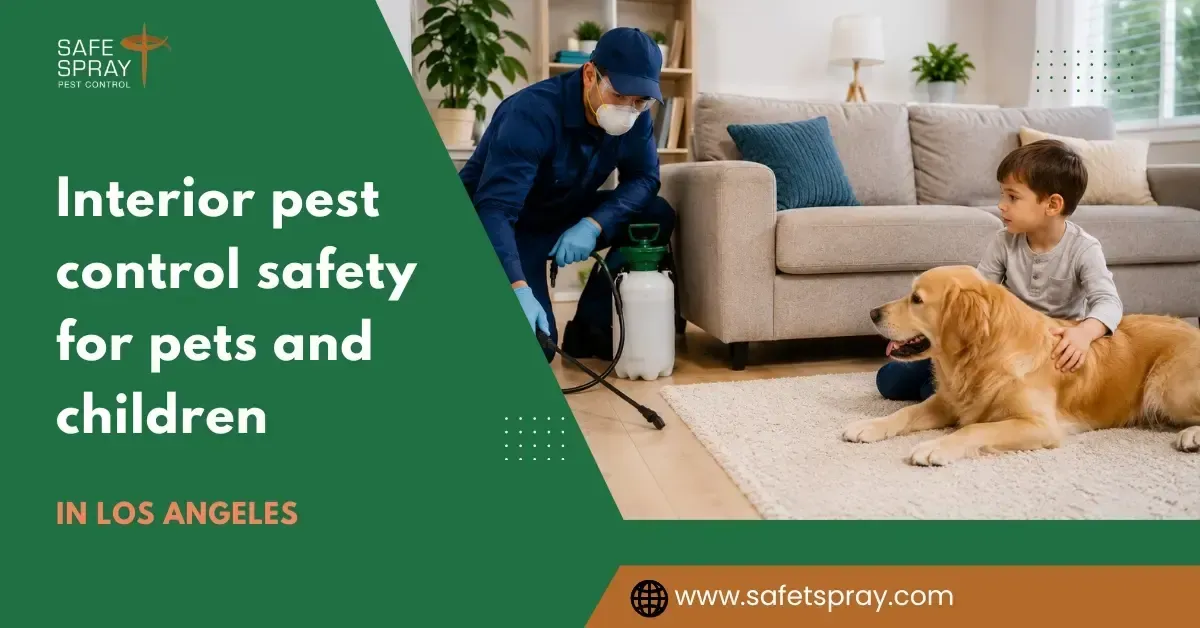
Is Interior Pest Control Treatment Safe for Pets, Young Children, and Bug Spray Use Indoors?
Yes, interior pest control safety for pets and children is a real concern for most San Bernardino County homeowners, and modern treatments are safe when a licensed technician applies them correctly.
Following the right steps before and after the treatment keeps the risk very low for everyone in the home. Summers in cities like Fontana, Rialto, Redlands, and Rancho Cucamonga push ants, cockroaches, fleas, mosquitoes, and rodents indoors constantly.
Most families here deal with pest problems while also having dogs, cats, toddlers, or babies at home. That combination is exactly why interior pest control safety for pets and children is one of the most searched questions in this area.
What Makes Interior Pest Control Products Safe for Pets and Children Today
Professional pest control products go through strict EPA testing before any technician brings them into your home.
EPA-Approved Products vs Store-Bought Bug Spray
The Environmental Protection Agency tests every pesticide used by licensed exterminators before approving it for home use. Professional products use controlled active ingredients applied in exact amounts to specific treatment areas only.
Most pet owners and parents who use a spray bottle from the hardware store apply far more product than needed. They spray floors, surfaces, and corners where children crawl, and pets and children walk and play. That over-application causes pesticide exposure, not a professional treatment done correctly.
Here is how professional treatment compares to store-bought bug spray:
How Eco-Friendly Formulas Work
Eco-friendly and low-toxicity pest control solutions use plant-based or naturally derived active ingredients. They break down faster after application compared to older chemical treatments.
Here is what makes them different from standard pesticide products:
Diatomaceous earth targets insects physically without leaving toxic residue
Granular baits go into cracks and crevices where children and pets cannot reach
Bait stations contain the product inside a sealed unit so direct contact is nearly impossible
Low-toxicity insecticide formulas dry fast and lose potency quickly after application
Non-toxic repellent options work for light pest pressure without any chemical spray at all
Safe T Spray Pest Control uses eco-friendly, EPA-approved products on every residential pest control job across San Bernardino County.
How Long Should Pets and Children Stay Out of the House
Most standard interior treatments need two to four hours before pets and children can safely return.
General Timeframes for Common Treatments
Here is a straightforward timeframe guide for San Bernardino County homeowners:
Always ask your exterminator for the exact waiting time before leaving your home.
Treatments That Need More Time
Some pest control treatments need much longer waiting periods. Do not rush these:
Bed bug heat treatments: 4 to 6 hours minimum
Termite fumigation: 24 to 72 hours depending on the product used
Heavy rodent control treatments with stronger pesticide: 4 to 6 hours
Fogger treatments in enclosed rooms: 4 hours with full ventilation after
Your technician from Safe T Spray Pest Control will always give you a clear re-entry time before starting any job in your home.
What to Do Before the Pest Control Technician Arrives
Preparing your home before the visit keeps children and pets safer during and after treatment.
Steps to Protect Your Children
Do these things before the technician arrives:
Pick up all toys from the floor in every room being treated
Move children's bedding off low surfaces and away from baseboards
Tell the technician if a baby or toddler lives in the home
Store all food and snacks in sealed containers or the refrigerator
Keep children out of all treatment areas during the full visit
Cover any open food prep surfaces in the kitchen before spraying begins
Steps to Keep Your Pets Safe
Do these things for every pet in the home:
Cover fish tanks completely and turn off the air pump before treatment starts
Move food and water bowls out of every room being treated
Remove all pet items including beds, toys, and blankets from treatment areas
Take dogs and cats outside or to a separate space away from the spray zone
Tell the technician exactly what pets live in the home
Here is a quick guide by pet type:
What to Do After Interior Pest Control Treatment
Clean treated areas properly before bringing pets and children back inside.
Ventilate and Clean the Right Way
Once the full waiting period is complete and your technician clears you to return, follow these steps before letting kids and pets back in:
Open windows and doors and let fresh air move through for 30 minutes
Mop all hard floors in treated areas with clean water
Wipe down low surfaces, baseboards, and cabinet fronts
Wash any pet items that stayed in the room during treatment
Rinse and refill water bowls and food bowls only after wiping down surfaces
Check that all bait stations and granular products are still in place and undisturbed
What Not to Do Right After Treatment
Toddlers need clean floors before they crawl, so mop every treated area first
Pet food bowls go back only after you wipe down every surface they sit on
Cats need a fully ventilated room before they start grooming themselves
Ventilation matters even when the product has no strong smell, because odourless does not mean fully dry
Bare hands stay off treated areas until surfaces are properly cleaned
Adding more product from a spray bottle over a recently treated area raises the chemical concentration beyond what the job needs
Are Some Treatments Safer Than Others for Children and Pets?
Gel baits and targeted sprays carry far less risk than full-room foggers.
Gel Baits vs Spray Treatments
Gel bait goes inside cabinet hinges, along baseboards, and in cracks where children and pets cannot access. It targets cockroach and ant colonies at the source without open surface contact.
Spray treatments cover more surface area but dry within minutes. Once dried completely, the risk to people and pets drops to a very low level.
Here is a side-by-side safety comparison:
Special Concerns for Young Children
Toddlers face more risk than older kids because they touch floors and put their hands in their mouths constantly.
Why Toddlers Need Extra Care
Children under three years old crawl on floors, touch baseboards, and put everything in their mouths. That behaviour makes floor cleaning after treatment more important in homes with babies than in homes with older kids.
Watch for these signs in young children after a treated area is re-entered too soon:
Skin irritation or redness on hands and knees
Eye watering or rubbing
Coughing or unusual fussiness
Nausea or stomach upset
Call poison control right away if any symptoms appear.
What Professional Application Gets Right That DIY Misses
Homeowners using store-bought products often overspray, skip ventilation, and miss the waiting period. A licensed technician follows label directions and label instructions exactly and applies only what the job needs.
Here is how the two approaches compare for homes with young children:
Special Concerns for Pets
Dogs, cats, birds, and fish all react differently to interior pest control treatments.
Dogs and Cats
Dogs sniff treated baseboards right away. Cats lick their paws after walking across treated floors. Keeping pets and children out during the full waiting period stops them from picking up residue before it dries.
Watch for these signs if your pet was near treated areas too soon:
Drooling or foaming at the mouth
Vomiting or loose stool
Lethargy or stumbling
Pawing at the face or eyes
Loss of appetite
Call your veterinarian or poison control right away if you notice any of these signs after pesticide exposure.
Birds and Fish
Birds have very sensitive respiratory systems and react to airborne insecticide faster than dogs or cats. Move bird cages to a completely separate room before any indoor treatment starts.
Fish tanks need a tight cover, and the air pump is turned off before spraying begins. Aerosol products spread through the air and can enter an open tank fast. These two pets need the most preparation before any pest control service visit.
FAQs
Can pest control make my dog sick?
It can if the waiting period is skipped or floors are not cleaned after treatment. Signs to watch for include drooling, vomiting, and lethargy. Call your vet right away if symptoms appear.
What happens if my cat licks a treated surface?
Minor exposure after the product dried completely is usually low risk. Call your vet right away if your cat shows drooling, vomiting, or unusual behaviour.
Is eco-friendly pest control as effective as regular treatment?
Yes. Modern non-toxic and eco-friendly products eliminate ant, roach, flea, mosquito, and other pests just as well as older chemical treatments and break down faster inside your home.
What is integrated pest management and is it safer for families?
Integrated pest management combines targeted treatments, sealing entry points, and sanitation guidance. It uses the least amount of pesticide needed to solve the problem, making it one of the safest approaches for homes with children and pets.
Pest-Free and Safe for Everyone at Home
Interior pest control safety for pets and children comes down to two things: using the right products and following the right steps before and after treatment. A licensed technician handles the products. You handle the preparation and post-treatment cleaning.
Safe T Spray Pest Control uses pet-friendly, EPA-approved products on every job and walks every San Bernardino County homeowner through the full safety process before and after each visit.
