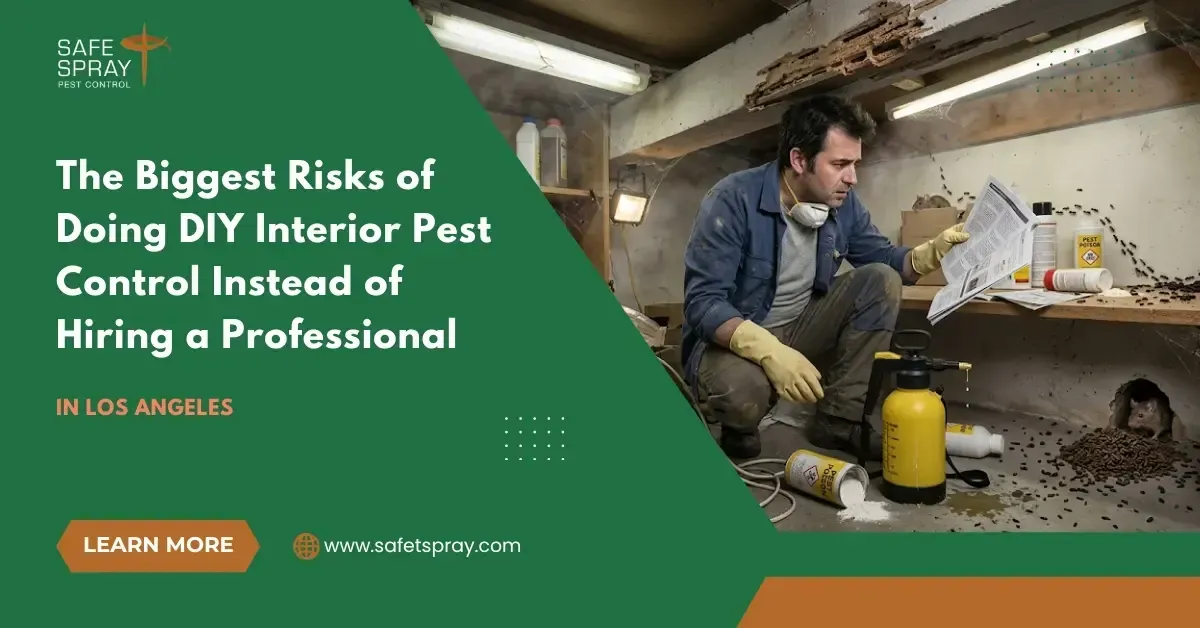
What Are the Biggest Risks of Doing DIY Interior Pest Control Instead of Hiring a Professional?
The biggest risks of DIY interior pest control are pesticide exposure for your family, surviving queens and eggs, pests scattering into new rooms, wasted money, and lost time while the infestation grows.
A nine dollar can of spray feels like the easy answer. We get it. But our techs at Safe T Spray Pest Control clean up failed home treatments every week, from Long Beach to Fontana, and most of those jobs started with that same can.
Store products have their place, and we point out where they fit later in this guide. The problems start when DIY interior pest control runs into a pest it cannot beat, like German roaches or bed bugs. We have watched that play out in Southern California homes for over a decade. Read this before your next store run.
Key Takeaways
These five points sum up the whole guide.
DIY interior pest control puts kids and pets at risk when people ignore the product label.
Store sprays kill the pests you see but leave queens, eggs, and nests alive.
Repellent sprays can split ant colonies and push roaches into new rooms.
Bug bombs rarely reach hidden pests and have sickened about 3,700 people, per the CDC.
Pros end most infestations in two to four visits, while failed DIY lets pests breed for weeks.
The 5 Biggest Risks of DIY Interior Pest Control
The five biggest risks are pesticide harm at home, colonies that survive the spray, scattered pests, fogger accidents, and weeks of lost time.
Here is each way DIY interior pest control goes wrong, starting with the one our techs see most often.
1. You Put Your Family and Pets at Risk
Misused pest products can poison the people and animals you want to protect.
Pest products are poisons. The pesticide label is a legal document, not a suggestion, and using a product in a way the label does not allow breaks federal law. People break that rule without knowing it. They spray outdoor-only products along baseboards, or they set bait stations where a toddler can grab them. Children under six face more pesticide exposure cases than any other age group. Natural products count as pesticides too, so store everything in its original container and out of reach. Pets face the same danger. A dog licks the floor you just treated, and now you have a vet bill on top of a pest problem. If an accident happens, call Poison Control at 1-800-222-1222.
2. You Kill the Bugs You See, Not the Colony
Contact sprays only kill the workers in the open, while the queens and eggs stay safe inside your walls.
A spray can clears the ants or roaches on your counter, and that feels like progress. Behind the wall, nothing changes. The queens keep laying, the egg cases stay sealed, and new workers replace the dead ones within days. With ants, the ones you see may be a small slice of the full colony. Sprays cannot reach the queen or her eggs, so the trail returns fast. One German roach egg case holds dozens of babies behind a shell most store sprays cannot crack. Each egg hatches on schedule whether you sprayed last week or not.
3. You Can Scatter Pests Into New Rooms
Repellent sprays can split ant colonies, and foggers can push roaches deeper into your home.
Many store sprays repel pests on top of killing them, and that part backfires. Spraying some ant species makes the colony split into new nests, a response called budding. One nest becomes three. Foggers cause a similar mess with roaches by driving them into wall voids and other rooms. Argentine ants make this worse in our area, since they live in huge networks with many queens. Your kitchen looks clean for a week while the same pests move into the bathroom.
4. Bug Bombs Bring Fire and Health Dangers
Bug bombs rarely reach hidden pests, and they can sicken people or start fires.
Stores sell bug bombs under the name total release foggers, and the label claims a full-room kill. Researchers tested that claim by setting foggers off in 20 roach-infested homes, and the roach numbers did not drop over two weeks. The cans still carry real dangers, though. The propellant is flammable, and misuse has caused fires and explosions. The CDC counted about 3,700 people who got sick from these products over two decades. Overuse is common too. People set off more cans than the room size allows, and the extra propellant raises the fire risk. The mist also lands on counters, toys, and floors after the fog settles.
5. The Problem Grows While You Experiment
Each failed product gives the pests more weeks to breed and spread.
Roaches and bed bugs grow their numbers fast. A problem that two visits could end in March can fill a kitchen by June. Our techs see this most in apartments around San Bernardino and Ontario, where pests also cross between units through shared walls. Bed bugs spread the fastest when you wait, since failed sprays push them from the bed into couches and the next bedroom. More waiting means more treatments, and more treatments mean a bigger bill.
What DIY Pest Control Really Costs
DIY costs less on day one, but repeat purchases and a growing infestation usually cost more than one professional plan.
Run this math before your next store trip.
Three months of cans, traps, and foggers adds up, and none of it comes with a promise. A pro plan does. Add the store trips and the weekends you spend re-spraying, and the savings shrink fast. That is the real gap between DIY interior pest control and a professional service.
When DIY Is Actually Fine
DIY handles prevention and tiny, day-one problems, like one short ant trail or a single spider.
We will be fair about this. Some jobs never need our truck in your driveway:
Wiping up an ant trail and setting a store gel bait the day it appears
Sealing small entry points around pipes and doors with caulk
Placing sticky traps to watch what moves at night
Vacuuming often and keeping food in sealed containers
Fixing a dripping faucet so pests lose their water source
Snap a photo of any pest you find, since a clear picture helps a pro give you straight answers. If the problem stays gone, the job is done. If not, stop buying products, because DIY interior pest control has hit its limit at that point.
How Safe T Spray Pest Control Removes the Risk
Our licensed techs match the product to the pest, place it where kids and pets cannot reach, and follow up until the job ends.
Safe T Spray Pest Control is a family-owned company with more than 13 years of work across Los Angeles County and San Bernardino County. Here is what you get on every job:
A free pest inspection, so we treat the exact pest in your home
Certified technicians who use gel baits, crack and crevice tools, and safe, eco-friendly products
Careful placement that keeps every product away from children and pets
A plain walkthrough of what we found, what we used, and where
A clear choice between a one-time treatment and an ongoing plan
A make-it-right promise if you are not happy with the results
That is how Safe T Spray Pest Control takes the risk out of pest control, from the first inspection to the last follow-up.
FAQs About DIY Pest Control Risks
Quick answers to the questions we hear most about home treatments.
Is DIY pest control safe around pets?
Only if you follow every label step. Pets walk on treated floors and sniff bait placements, so pros put products where animals cannot reach them.
Why do I see more roaches after a bug bomb?
Fogger mist repels roaches and pushes them deeper into walls and nearby rooms. It also misses their egg cases, so the next wave hatches untouched.
Do ant sprays make an ant problem worse?
They can. Spraying some ant species splits the colony into new nests, a response called budding. Slow-acting baits reach the queen instead.
When should I stop DIY and call a professional?
Call when pests return within two weeks, spread to new rooms, or involve roaches, bed bugs, or rodents. Those three almost never end with store products.
The Bottom Line
A licensed tech can end in two visits what a shelf of sprays cannot fix in three months. Skip the next round of DIY interior pest control and book a free inspection instead. Call Safe T Spray Pest Control at (323) 328-6435. We serve every corner of Los Angeles County and San Bernardino County.
